
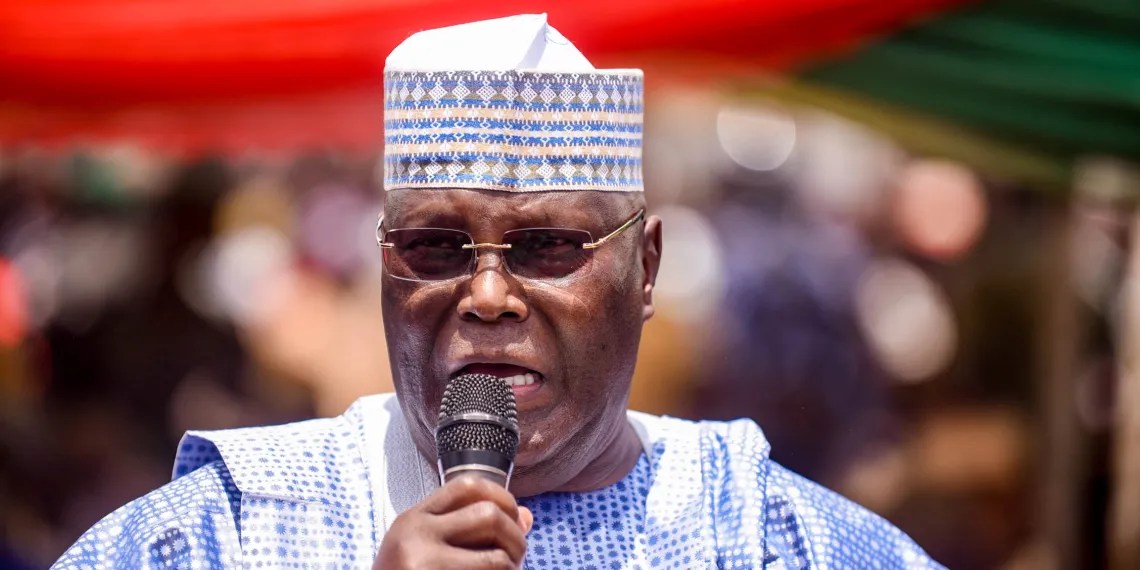
Atiku Vows to Cancel Student Loans If Elected, Says Nigerian Students Deserve Scholarships
Former Vice President and 2027 presidential hopeful Atiku Abubakar has reportedly pledged to cancel student loans if elected president of Nigeria, arguing that Nigerian students should receive scholarships rather than graduate from university with repayable education debt.
The position places student financing at the centre of the growing political debate over how Nigeria should fund higher education and whether students should be expected to repay government-backed loans after graduation.
Atiku's reported position comes as the Nigerian Education Loan Fund (NELFUND) continues to expand the Federal Government's student loan programme, which was introduced to make higher education more accessible to Nigerians who may struggle to finance their studies.
The debate is particularly significant for university students, as the current system provides financial assistance through loans that beneficiaries are expected to repay under specified conditions.
Atiku's Position on Student Loans
Atiku's reported proposal is based on a different approach to financing higher education.
Rather than relying primarily on repayable loans, the former vice president's position is that Nigerian students should have access to scholarships and other forms of non-repayable educational support.
The argument is that students should not have to begin their working lives with financial obligations created by the cost of obtaining a university education.
The proposal has attracted attention because of the number of Nigerian students who are now familiar with the NELFUND system and its financial support for institutional charges and upkeep.
If implemented, a policy to cancel existing student loans would represent a significant change in the country's approach to government-supported higher education financing.
However, important questions remain about how such a policy would be implemented, how existing beneficiaries would be treated and how future generations of students would be funded.
How the NELFUND Student Loan Scheme Works
Nigeria's current student loan programme is administered by the Nigerian Education Loan Fund, commonly known as NELFUND.
The programme was established to reduce financial barriers to higher education by allowing eligible Nigerian students to access interest-free loans for approved educational expenses.
NELFUND's current student loan information states that the programme can provide support for institutional charges and upkeep.
Under the current arrangement, institutional charges can be paid to the student's institution, while approved upkeep support can be paid to the student's designated bank account.
The programme is therefore fundamentally different from a scholarship.
A scholarship generally does not require the recipient to repay the money, while a loan creates a financial obligation that must be repaid according to the terms of the agreement.
NELFUND's published terms provide for repayment under specified conditions. Students who participate in the National Youth Service Corps programme are required to begin repayment two years after completing NYSC, while employed beneficiaries are subject to repayment arrangements tied to their income.
This distinction is at the heart of the current political debate.
Why the Student Loan Debate Matters to Nigerian Students
The cost of obtaining a university education has become a major concern for many Nigerian families.
Beyond tuition and institutional charges, students and their families also have to deal with accommodation, transportation, feeding, textbooks, devices, internet access and other expenses associated with university life.
For students from financially disadvantaged backgrounds, these costs can create serious barriers to completing their education.
The student loan programme was introduced partly to address this problem.
Instead of requiring students to find the entire cost of their education before enrolling or during their studies, the loan system allows eligible students to access government-backed financial support.
The trade-off is that the money is a loan rather than a grant.
This means beneficiaries may eventually have to repay the amount received.
Atiku's reported position challenges that model by arguing that government support for students should be provided primarily through scholarships rather than debt.
Scholarships or Student Loans?
The debate is not entirely new.
Governments around the world use different approaches to financing higher education.
Some systems rely heavily on scholarships and grants. Others combine grants with government-backed loans, while some use income-contingent repayment systems in which graduates repay only when their income reaches a certain level.
Nigeria's current NELFUND system follows the loan model.
Atiku's proposal would move the country toward a system in which scholarships and other non-repayable forms of assistance play a much larger role.
Supporters of the proposal could argue that education is a public investment and that graduates should not be burdened with debt simply because they needed financial assistance to attend university.
Critics, however, could raise questions about the cost of funding such a programme on a national scale.
What Would Loan Cancellation Mean for Existing Beneficiaries?
One of the biggest questions surrounding the proposal is what would happen to students who have already received NELFUND loans.
If a future administration were to cancel the loans, it would need to determine whether the cancellation would apply to:
- Students who have already received and spent their loan funds
- Graduates who have not yet begun repayment
- Graduates who have already started repaying their loans
- Students currently receiving NELFUND support
- Future beneficiaries who have not yet applied
Another question would be whether students who have already repaid some or all of their loans would receive refunds or whether cancellation would only apply to outstanding balances.
These details have not been established in the reported proposal.
The implementation framework would therefore be just as important as the announcement itself.
The Cost of Replacing the Loan Model
A nationwide scholarship-based system would also require substantial and sustainable funding.
Unlike a loan programme, where government funds can potentially revolve as beneficiaries repay what they borrowed, a scholarship programme would require government to continuously finance the education of new beneficiaries.
That raises an important policy question: where would the money come from?
Nigeria would need to determine the size of the scholarship programme, the number of beneficiaries, eligibility requirements and how much each student would receive.
There would also need to be safeguards to ensure that the programme reaches students who genuinely need financial assistance.
A large scholarship system could potentially improve access to higher education, but it would also require strong financial management and transparent administration.
Atiku's Proposal Comes Amid Wider Education Debate
The student loan issue is becoming part of a broader political debate over the cost and accessibility of education in Nigeria.
Atiku has recently criticised government policies that he says make education increasingly difficult for ordinary Nigerians to afford.
In July 2026, he criticised proposed examination fees for WAEC and NECO, arguing that financial barriers should not prevent young Nigerians from accessing education. He also questioned whether student loans could adequately address problems that begin before students even reach university.
The latest reported position on student loans therefore fits into a wider argument over whether government education policy should focus more heavily on direct financial support and affordability.
NELFUND Has Become a Major Part of the Education System
Since its introduction, NELFUND has grown into a significant part of Nigeria's higher-education financing system.
The Federal Government has continued to highlight the programme as one of its major interventions for expanding access to tertiary education.
Official NELFUND information currently shows more than 1.3 million registered students and more than 1.6 million loan applications on its platform, demonstrating the scale of demand for financial assistance.
The government has also continued to provide additional funding to the programme.
President Bola Tinubu said in July 2026 that NELFUND was flourishing and that additional funding had been approved from money recovered by the Economic and Financial Crimes Commission.
The administration has consequently presented the student loan programme as one of the mechanisms through which students can remain in school despite financial difficulties.
What Atiku's Proposal Could Mean for FUTO Students
For students at the Federal University of Technology, Owerri, the debate is particularly relevant.
Like students in other Nigerian tertiary institutions, FUTO students who meet the relevant requirements can seek support through the federal student loan programme.
A shift from loans to scholarships would therefore potentially change the way students finance their education.
Students who currently depend on loans to cover institutional charges or upkeep would be particularly interested in whether a future policy would convert existing obligations into grants or simply create a new scholarship system for future students.
However, until a detailed policy document is released, it would be premature to assume exactly how FUTO students or students at other institutions would be affected.
A Political Promise With Major Policy Implications
Atiku's reported pledge comes ahead of the 2027 presidential election, making the issue both an education policy question and a political one.
The student population represents a significant constituency in Nigeria, and policies affecting university students are likely to receive considerable attention during the election period.
The debate over student loans also intersects with other major issues affecting young Nigerians, including unemployment, inflation, tuition and institutional charges, accommodation costs and the transition from university into the labour market.
For many students, the question is not simply whether they can enter university.
It is whether they can afford to remain there and graduate without being overwhelmed by financial pressure.
What Happens Next?
The major issue to watch will be whether Atiku and his political platform provide further details about the reported proposal.
A comprehensive policy would need to explain how existing NELFUND loans would be handled, how future scholarships would be funded, who would qualify and how the programme would be protected from abuse.
It would also need to address the long-term sustainability of higher education financing.
For students, the distinction between a scholarship and a loan is significant.
A scholarship can provide financial assistance without creating a repayment obligation.
A loan can provide immediate access to education but leaves the beneficiary with a future financial responsibility.
That difference makes the debate over Nigeria's student financing model one that could have consequences long after the 2027 election.
The Bigger Question: Who Should Pay for Higher Education?
At the centre of the debate is a fundamental question about the role of government in education.
Should students who cannot afford university be given loans that they repay after entering the workforce?
Should government provide scholarships to students based on financial need or academic performance?
Should there be a combination of scholarships, grants and loans?
Or should Nigeria pursue a broader system in which public universities receive significantly more funding so that the financial burden on individual students is reduced?
Atiku's reported position favours greater reliance on scholarships.
The current NELFUND model relies on interest-free loans.
The coming political debate will likely determine how these competing ideas are presented to Nigerian voters and, ultimately, whether any proposed changes can be implemented.
FUTO Central's Take
For Nigerian students, the most important issue is not simply whether a politician promises to cancel loans or expand scholarships.
Students need to know exactly how any proposed policy would work.
A credible education financing plan should explain how students will be supported, how institutions will be funded, how the programme will be sustained and how assistance will reach those who need it most.
Atiku's reported pledge has therefore opened an important conversation about the future of student financing in Nigeria.
Whether the country should continue with the NELFUND loan model, move toward a scholarship-based system or adopt a combination of both will remain an important question as the 2027 election approaches.
For now, students will be watching closely for more details about the proposal and how it would affect both current and future beneficiaries of government education financing.


Comments 0
Join the conversation with verified FUTO students.
Verify your JAMB registration number to comment, like and reply.
Loading discussion...